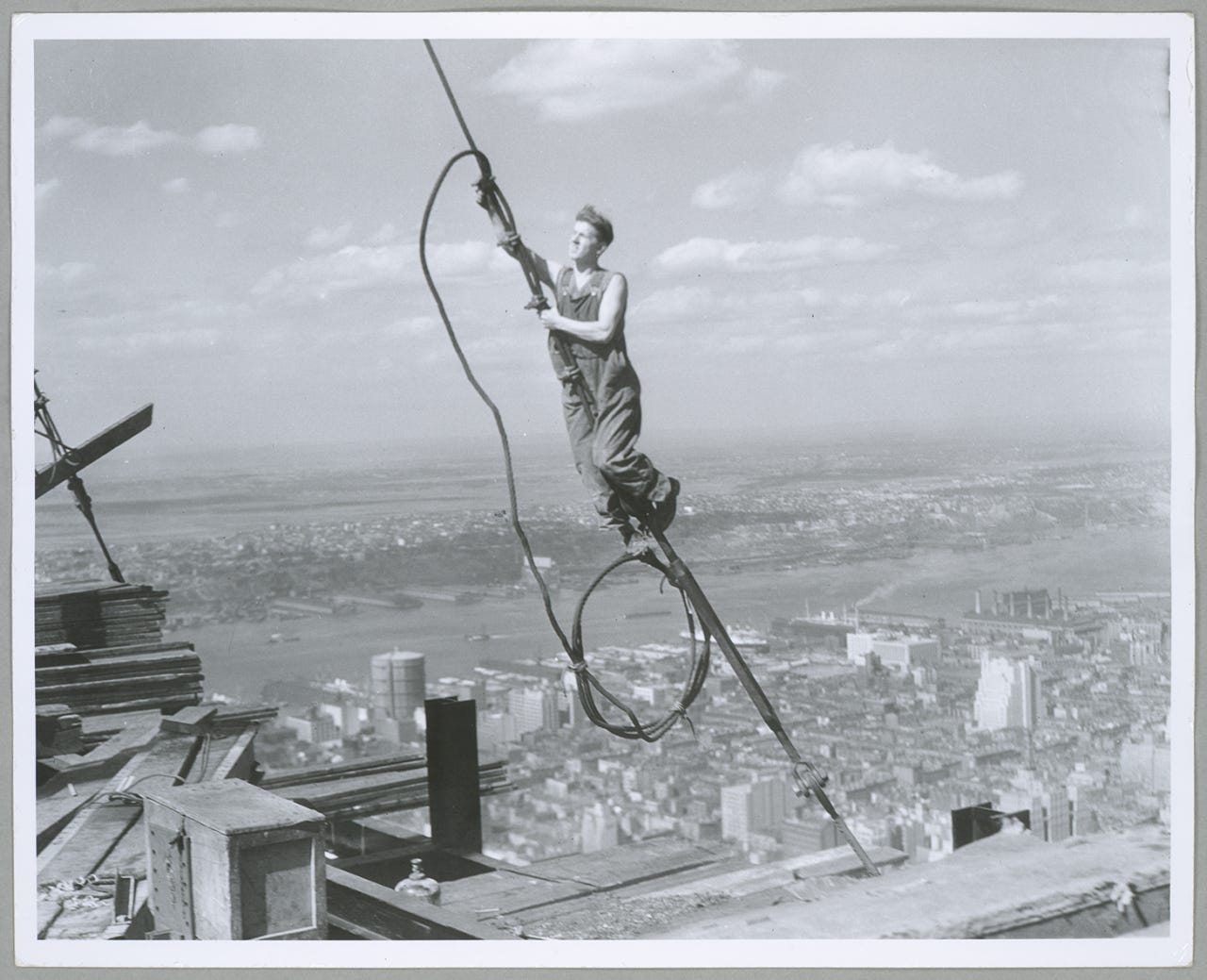
Because he knows that I’m a fan of Lewis Hine, the great child labor photographer, a friend sent me this review of a new book based on Hine’s photos of the “roughneck daredevils” who worked on the Empire State Building for the 13 months it took to complete the structure during the Great Depression. The book is called Men at Work and it features Hine’s photographs of the 30 or so construction workers who plied their trades high up in the skies with seemingly, no concern for their safety. This line in the review describing one man nicknamed Sky Boy struck home with me. As Glenn Kurtz, the author of the book says, “His use as a symbol almost precludes attention to him as an actual person.”
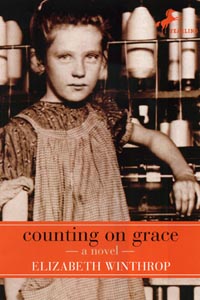
When I first saw Hine’s photographs of textile workers in a Vermont factory, my eye was drawn over and over again to one child.
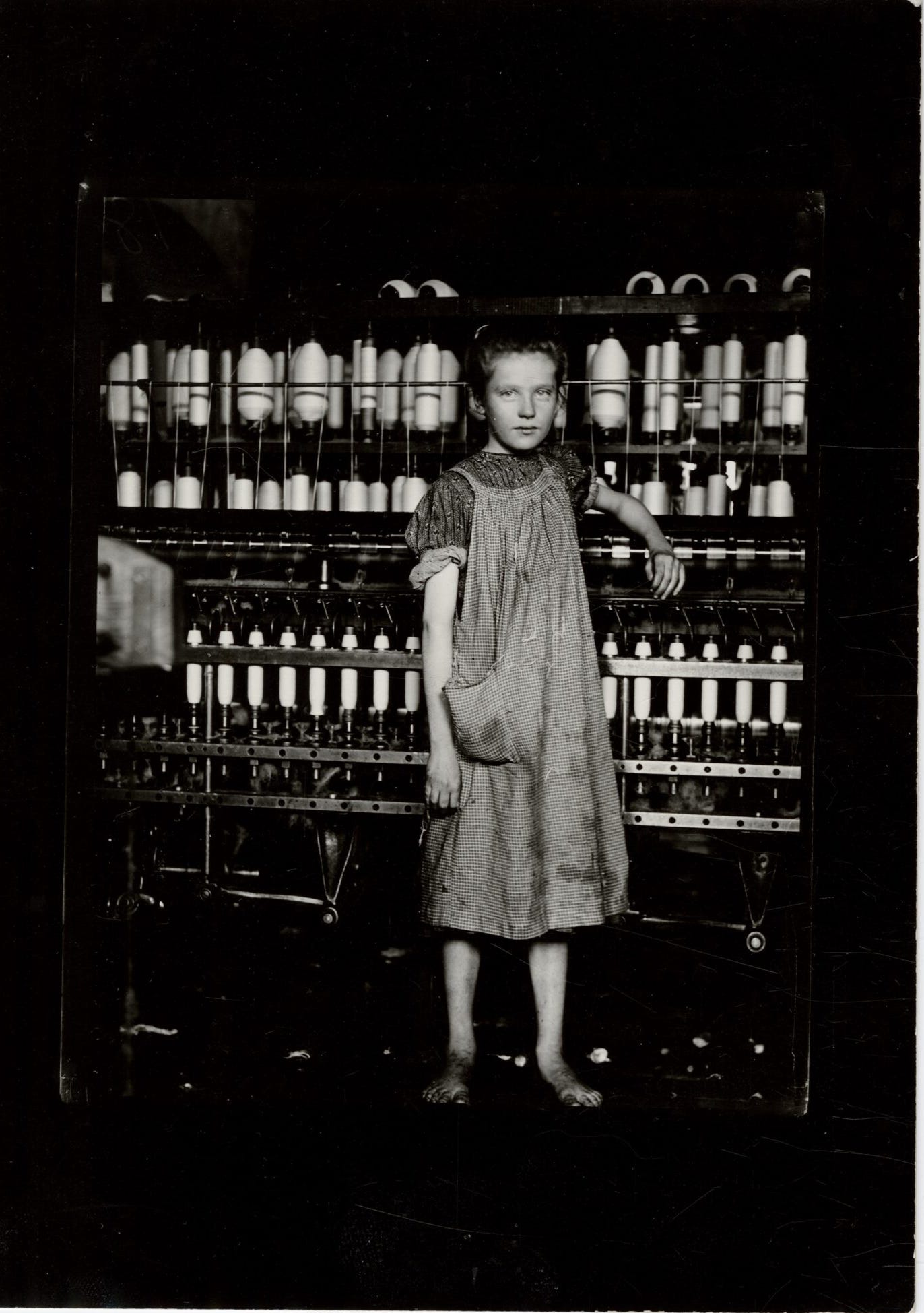
The image of this young girl’s bare oil-smeared feet, her filthy smock and her hair bound up like an old woman’s, haunted me. I decided to write an historical novel inspired by her, but not about her.
The manuscript of Counting on Grace was accepted by my editor after one revision but as soon as it was headed to copyediting, I decided I needed to find out more about the actual child whose face had prompted me to write the book. In this case, I discovered, to paraphrase the author of Men At Work, that “her use as a symbol had precluded attention to her as an actual person.” Hine’s original caption for the photograph reads, “Anemic Little Spinner in North Pownal Cotton Mill.” An informational poster erected at the site of the original mill (later a Superfund site) listed her as Annie Laird. I imagine that when the child tried to tell the photographer her name, her voice was drowned out by the noise of the spinning frames. Her real name was Addie Card, she was 12 years old in 1910 and she was a doffer which meant she “did off” the full bobbins and replaced them with empty ones. The entire time that she worked the length of the frame, the machine was put on what was called “the loose pulley” and her mother, the spinner, was not paid. Imagine the pressure on a child to complete that task as fast as possible.
With the help of Joe Manning a dogged researcher, who went on to locate many of the children in Hine’s photographs, I was able to find this girl’s grandchildren and great-grandchildren. Until we told them about their ancestor’s time in the mill and the ways in which her photo had been used on a 1998 postage stamp

and in a Reebok ad, they had no idea that Addie had become an icon, a symbol of the horrors of child labor. They just knew her as Grandma Pat.

Although Addie’s life was much more difficult than my character Grace’s, I was happy in the end to have dug this one child out of the dustbin of history so that readers could come to know her as an actual person.
Lewis Hine once said he was more interested in “persons than in people.” So are novelists who bring a character’s story to life for the reader by revealing it through the lens of a person.
Pablo Picasso once commented that “Art is the lie that reveals truth.” When I talk about writing historical fiction, I often put it this way.
I’m not saying it happened, I’m saying it could have happened.